
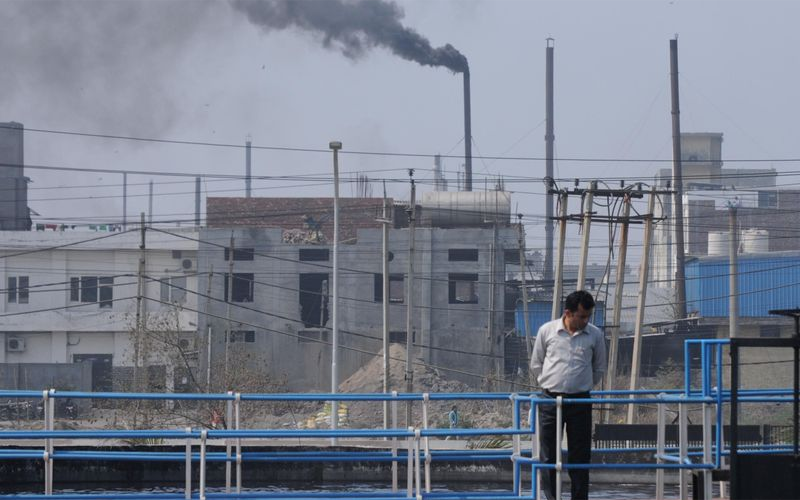
Amidst the deteriorating air quality in the National Capital Region (NCR), a high-level Air Quality Panel, comprising officials from the Commission for Air Quality Management (CAQM) and the State Pollution Control Board, conducted a massive surprise inspection of 105 industrial and commercial units across the Nuh district today.
-
Targeted Units: The inspection teams focused on areas with high industrial density and regions where complaints of illegal burning and high dust levels had been reported. The units inspected included brick kilns, stone crushing plants, and small-scale manufacturing units that utilize coal or biomass for fuel.
-
Key Areas of Inspection:
-
Emission Control Systems: Checking for the installation and functionality of scrubbers, filters, and chimneys.
-
Fuel Usage: Verifying if units are using approved clean fuels instead of illegal coal or wood.
-
Dust Mitigation: Monitoring if construction sites and stone crushers are using water sprinklers and anti-smog guns.
-
-
Findings: Out of the 105 units inspected, several were found to be operating in violation of the Graded Response Action Plan (GRAP). Common violations included malfunctioning pollution control equipment and the open storage of raw materials, which contributes to fugitive dust.
-
Immediate Action: The panel has issued show-cause notices to the non-compliant units, and a few units were ordered to cease operations immediately until they meet the required standards. Fines amounting to several lakhs of rupees are expected to be imposed as environmental compensation.
-
Official Quote: “Our objective is to ensure that industrial growth does not come at the cost of public health. We are maintaining a zero-tolerance policy against units that flout emission guidelines during the peak winter months,” a senior member of the panel stated.
-
Ongoing Vigilance: The panel has announced that such surprise checks will continue throughout January and February to maintain the air quality index (AQI) within manageable limits in the NCR periphery.