



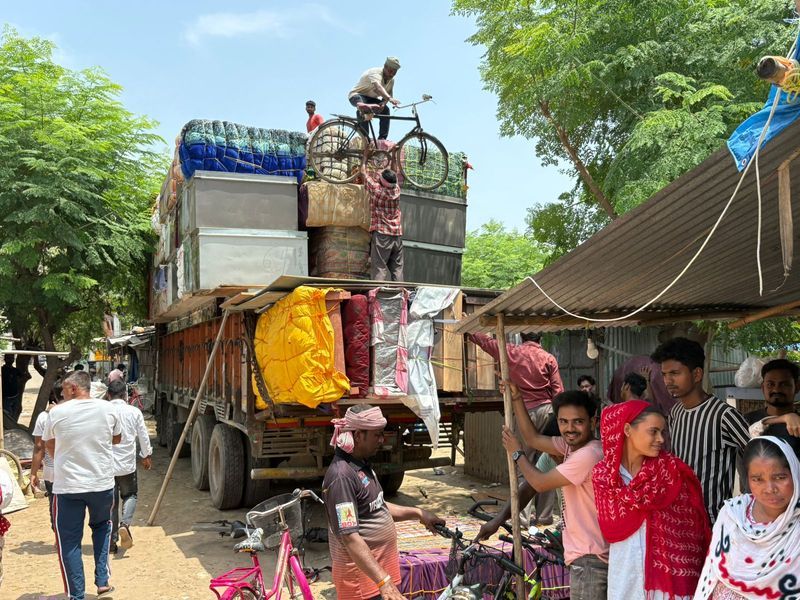
The Economic Survey 2025-26, tabled in Parliament recently, has flagged the mass exodus of migrant workers from Gurugram in mid-2025 as a critical case study, warning that modern Indian cities are precariously dependent on an “invisible” informal workforce. The survey highlighted that the police-led verification drive, which targeted suspected illegal immigrants, inadvertently triggered a panic-driven departure of thousands of Bengali-speaking migrant workers, causing the city’s civic infrastructure to collapse “almost overnight.”
The document termed this workforce—comprising domestic helps, sanitation workers, waste collectors, and security guards—as “structurally indispensable.” When these workers fled fearing harassment, Gurugram faced an immediate sanitation crisis with garbage piling up in upscale sectors and gated communities struggling to function. The Survey noted that the absence of these workers led to “elevated transaction costs” for residents and exposed severe gaps in urban governance.
Comparing Gurugram with its neighbor Noida, the report pointed out that Noida fared better during similar disruptions due to its “integrated metropolitan governance” model. Unlike Gurugram, where the Municipal Corporation often acts as a “pass-through agency” for funds with fragmented accountability, Noida utilizes standardized contracts and dedicated urban units that ensure continuity of services.
The Survey’s ultimate recommendation to policymakers is to stop treating informal labor as “expendable.” It urges the government to create institutional support systems, including social security and formal recognition, to integrate these workers into the city’s economic and social fabric. “By formalising this workforce, urban systems can remain resilient instead of being one exodus away from a total shutdown,” the report concluded.