


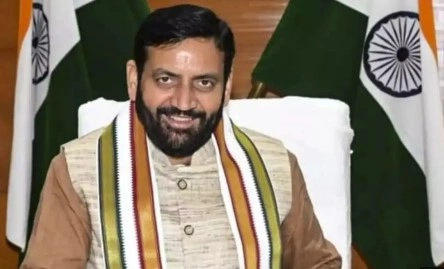
Addressing a state-level conference, Haryana Chief Minister Nayab Singh Saini announced that every rural worker in the state would receive an additional benefit of at least ₹10,000 annually under the new Viksit Bharat – Guarantee for Rozgar and Ajeevika Mission (Gramin), abbreviated as VB-G RAM G. The Chief Minister hailed the scheme as a significant upgrade over the previous MGNREGA system, terming it Prime Minister Narendra Modi’s “guarantee” for dignified livelihood.
Key Features & Financial Benefits The CM highlighted that the new VB-G RAM G Act (Bill 2025) fundamentally restructures rural employment guarantees:
-
Increased Work Days: The statutory guarantee for employment has been raised from 100 days to 125 days per year.
-
The ₹10,000 Calculation: With Haryana offering the country’s highest minimum wage for rural labor at ₹400 per day, the additional 25 days of guaranteed work (along with other provisions) translates to a direct income boost of ₹10,000 for every worker.
-
Total Annual Income: Consequently, the annual income of a rural unskilled worker in Haryana is expected to rise to a minimum of ₹50,000.
Seasonal Flexibility & Weekly Payments Saini explained that the new law empowers states to suspend work for up to 60 days during peak sowing and harvesting seasons. This ensures that government work does not conflict with agricultural labor demand. Workers can earn separately during these 60 days in the fields, in addition to the 125 days guaranteed by the government.
-
Weekly Wages: A major administrative change is the shift to weekly wage payments, replacing the earlier 15-day cycle. The CM stated this would eliminate “fake workers, fake work, and fake payments” while ensuring timely cash flow for laborers.
Political Context Comparing the current regime with the previous Congress government, CM Saini noted that while the Congress dispersed less than ₹2,000 crore in a decade, the BJP government has paid over ₹5,000 crore to workers between October 2014 and October 2025.