

LONDON – A recent Sotheby’s auction in London, titled ‘Arts of the Islamic World and India,’ set a new record, fetching a combined total of over £10 million. The sale saw extraordinary bids for two prominent Indian historical artifacts, both vastly outperforming their initial guide price estimates.
The top-selling Indian item was a pair of silver-mounted flintlock pistols, specially commissioned for the 18th-century Mysore ruler, Tipu Sultan. The pistols sold to a private collector for £1.1 million, an amount nearly 14 times their pre-sale estimate. The catalogue notes that these pistols were traced back to the Siege of Seringapatam in May 1799, where they were among the possessions looted after the ruler’s death. An unusual feature of the pistols is that they were mirrored (left-hand and right-hand locks), a combination preferred by the Tiger of Mysore.
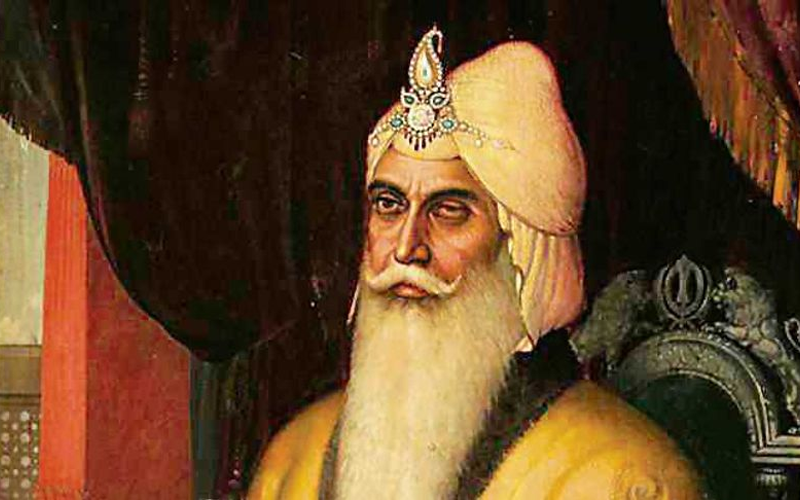
Setting a new benchmark for Sikh art, an intricate 19th-century painting of Maharaja Ranjit Singh was acquired by an institution for £952,500. The work, by artist Bishan Singh, depicts the founder of the Sikh Empire in a grand procession through a Lahore bazaar, accompanied by his extravagant court entourage, spiritual advisors, and street performers.
Other highlights from the sale included a silver-mounted flintlock blunderbuss made for Tipu Sultan (sold for £571,500), a rare late 16th-century Quran manuscript from the library of Mughal Emperor Akbar (£863,600), and a Mughal jade “horsehead” hilted dagger (£406,400).
Sotheby’s reported lively bidding from 25 countries, with 20 per cent of the buyers being new to the auction house.