
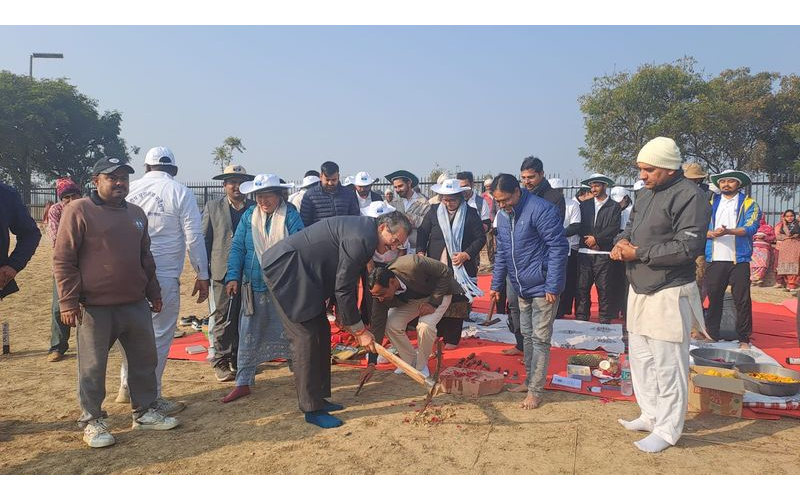
The Archaeological Survey of India (ASI) has launched a fresh phase of excavation at the iconic Harappan site in Rakhigarhi village. The project was formally inaugurated on Thursday by YS Rawat, Director General of the ASI. This new phase marks the beginning of a proposed three-year excavation programme.
Objectives of the New Dig Unlike previous excavations that focused on chronology and the main residential mounds, this phase has specific new goals:
-
Peripheral Focus: The digging will concentrate on the outer edges of the mounds (specifically Mounds 1, 2, and 3).
-
Town Planning: The primary aim is to understand the town planning and determine whether the seven mounds formed a single large block or existed as distinct habitation sectors.
-
Defensive Structures: Experts aim to uncover evidence of security systems or defensive walls that may have fortified the city.
-
River Impact: The team will investigate the historical impact of the Dristavati river, which reportedly flowed near the township, on the settlement’s ecosystem.
Execution Team
-
Agency: The work is being executed by the ASI’s Excavation Branch-II (Greater Noida).
-
Leadership: The operations are being guided by Deputy Superintendent Archaeologist Bhupendra Singh Phonia.
-
Collaboration: Around 15 students from institutions like Kurukshetra University and Shimla University have joined the site. Trenches are being laid using DGPS (Differential Global Positioning System) technology.
Context Rakhigarhi is considered the largest Harappan site in the world. Previous excavations (1997-2000, 2003-06, 2013-16, 2020-25) have unearthed significant finds, including a 4,000-year-old skeleton, jewellery factories, and evidence of overseas trade